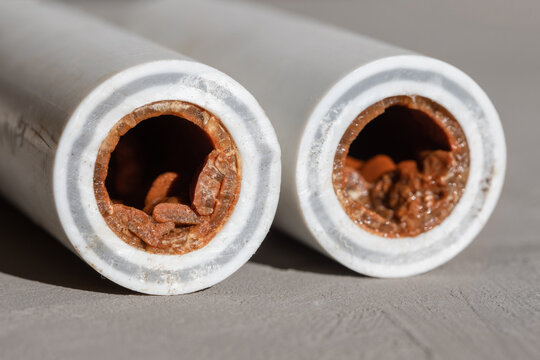
Deposits are a widespread problem in various industries, from water and wastewater treatment to chemical and equipment manufacturing . They can impair equipment performance, shorten service life, and increase maintenance costs. One effective method for combating deposits is the development and application of molecules that prevent them. In this article, we examine the molecular structures required to prevent deposits , the mechanisms of action of these molecules, and their applications.
Definition and origin of sediments
Precipitation is the accumulation of solid particles in a solution, usually as a result of chemical reactions, changes in temperature or pH, or high ion concentrations . These particles are often carbonates, sulfates, hydroxides, and heavy metals . Factors that cause precipitation include :
-
The system temperature rises or falls.
-
Changes in the pH value of a solution
-
Increased concentration of metal ions
-
Presence of solid impurities
The role of molecular structure in preventing precipitation
To prevent deposits, it is necessary to develop molecules that can interact with ions or particles in solution and prevent their accumulation . These molecules can typically be divided into two categories:
1. Chelating agents
Chelating agents are molecules that can keep metal ions in a stable form in solution and prevent their precipitation.
-
Structural properties of chelating agents :
-
It contains several functional groups that can bind ions (e.g., -COOH, -OH and -NH₂).
-
Ring or chain structures allow the formation of multiple bonds with metal ions.
-
Molecular flexibility enables the formation of stable bonds.
-
-
Example :
-
Ethylenediaminetetraacetic acid (EDTA)
-
citric acid
-
Polyphosphat
-
Mechanism of action: Instead of reacting with other ions and forming a precipitate, the metal ions are trapped by chelate groups and remain in solution.
2. Dandruff inhibitor
These molecules inhibit the growth of precipitating crystals and prevent their accumulation.
-
Structural properties of inhibitors :
-
Polar or ionic groups that adhere to the surface of a crystal.
-
Long polymer chains prevent the crystals from sticking together.
-
Combination of acids or phosphates with flexible carbon chains .
-
-
Example :
-
Polyacrylates
-
Polymethacrylate
-
Organophosphonate
-
Mechanism of action: These molecules bind to the crystal surface, thus preventing the growth and fixation of particles, so that deposits do not form or only form very slowly.
Key features of the molecular structure that prevent precipitation
-
Suitable polarity : Molecules must contain polar groups in order to react with ions and molecules in solution.
-
Multifunctionality: Multifunctional molecules can encapsulate ions better and have a stronger effect in preventing precipitation.
-
Chain flexibility : Flexible chains allow the molecules to attach to the crystal surface and surround the ionic structure.
-
Chemical stability : The molecules must remain stable under changes in temperature and pH to ensure long-term effectiveness.
-
Eco-compatibility : In the drinking water and food industries, the use of biocompatible and non-toxic molecules is of particular importance.
Mechanism for preventing deposits
-
Ionic chelation :
Metal ions are bound by functional groups of molecules , thus preventing a reaction with anions. -
Prevents crystal growth :
Molecules bind to the surface of the crystal, thus preventing new molecules from attaching to the crystal. -
Dispersion of suspended particles :
The particles cause the fine particles to disperse in the solution and not stick together. -
Reduction of the sedimentation rate :
By combining the mechanisms mentioned above, the sedimentation rate is reduced and the system remains stable.
practical application
1. Water supply and wastewater disposal
-
Prevents limescale deposits in pipes and boilers.
-
Polyphosphates and EDTA are used to bind metal ions in solution.
2. Oil and petrochemical industry
-
Prevents the deposition of sulfates and carbonates in pipelines and distillation columns.
-
Polyacrylate inhibitors are used to control the formation of calcium deposits.
3. Food and pharmaceutical industry
-
Prevents the precipitation of calcium and magnesium in drinks and juices.
-
It uses organic acids and edible polymers.
4. Devices
-
Prevents limescale build-up in kettles, dishwashers and washing machines.
-
Use limescale removers in detergents and fabric softeners.
Axeon S-200 corrosion protection membrane
In conclusion
Molecular structure plays a crucial role in preventing contamination. Suitable molecules must possess polar and multifunctional groups, chain flexibility, and the ability to interact with ions and crystal surfaces. The targeted development of these molecules can prevent or significantly reduce contamination, which is of vital importance to various industries such as water supply, oil, food, and household goods manufacturing.
A comprehensive understanding of the structural properties of pollutant reduction particles and their proper application can therefore lead to a longer service life of the systems, lower maintenance costs and improved system efficiency.