Introduction
In the water treatment industry, the prevention of limescale deposits and the cleaning of equipment is crucial. Two common materials for this are limescale inhibitors and acid descalers. Both materials improve the efficiency of water treatment systems and reduce limescale problems, but each has its own properties and applications. In this article, we examine and compare the two materials and analyze their strengths and weaknesses.
Antifouling coating
Definition and Use: An antiscalant is a chemical added to water treatment systems to prevent the formation of mineral deposits. This substance forms a barrier on the surface of mineral particles, preventing them from sticking to the system walls and forming deposits.
Advantages:
- Prevents Scalding: Anti-scalding improves system efficiency by preventing scaling.
- Reduced maintenance costs: By preventing sludge build-up, less frequent cleaning of the system is required and maintenance costs are reduced.
- Longer equipment life: By avoiding deposits, the service life of the equipment is increased.
Defects:
- Need for precise dosing: To achieve optimal effectiveness, precise dosing of the descalers is required, which can be challenging.
- Ongoing costs: The continued use of antifouling materials incurs ongoing costs.
Dechlorinating acid
Definition and Use: Dechlorinating acid is a chemical used to remove limescale in water treatment systems. It cleans the equipment and improves system efficiency by dissolving mineral deposits.
Advantages:
- Effective cleaning: Dechlorinating acid is able to completely and effectively remove mineral deposits.
- Restoring system efficiency: Cleaning the equipment will restore the efficiency of the water treatment system to its original state.
- Easy to use: The application of dechlorinating acid is relatively simple and does not require precise dosing.
Defects:
- Safety risks: Acid dechlorinators can pose a hazard to the user and require careful safety precautions.
- Possible equipment damage: Dechlorinating acid can damage equipment if used improperly.
- Additional costs: Frequent repairs due to possible equipment damage may result in additional costs.
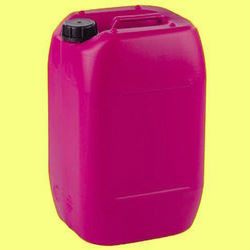
Comparison of decalceric acid and anticalcic acid
Effectiveness: Limescale inhibitors effectively prevent the formation of limescale, while acid descalers effectively remove existing deposits. The choice between the two depends on the state of the system and its specific requirements.
Cost: Limescale inhibitors have ongoing costs but reduce maintenance costs, while acid descalers require regular cleaning and can incur additional costs due to possible equipment damage.
Safety: Descaling with a descaler is less dangerous than acid descaling, but requires precise dosing. Acid descaling with chlorine is riskier and requires strict safety precautions.
Application: Antiscalant is used to prevent limescale build-up, and descaleric acid is used to remove existing limescale. Depending on the requirements of the system, one of these two means or a combination of both can be selected.

Graduation
The choice between an anti-limescale agent and an acid descaler depends on the specific requirements and operating conditions of the water treatment plant. An anti-limescale agent prevents limescale build-up and extends the life of the plant, while an acid descaler effectively removes existing deposits and restores the efficiency of the plant. A thorough examination of the system requirements and an evaluation of the advantages and disadvantages of each material will help you make the best choice.
I hope this article was helpful for your website. Should you need any further information or details, I will be happy to help!